
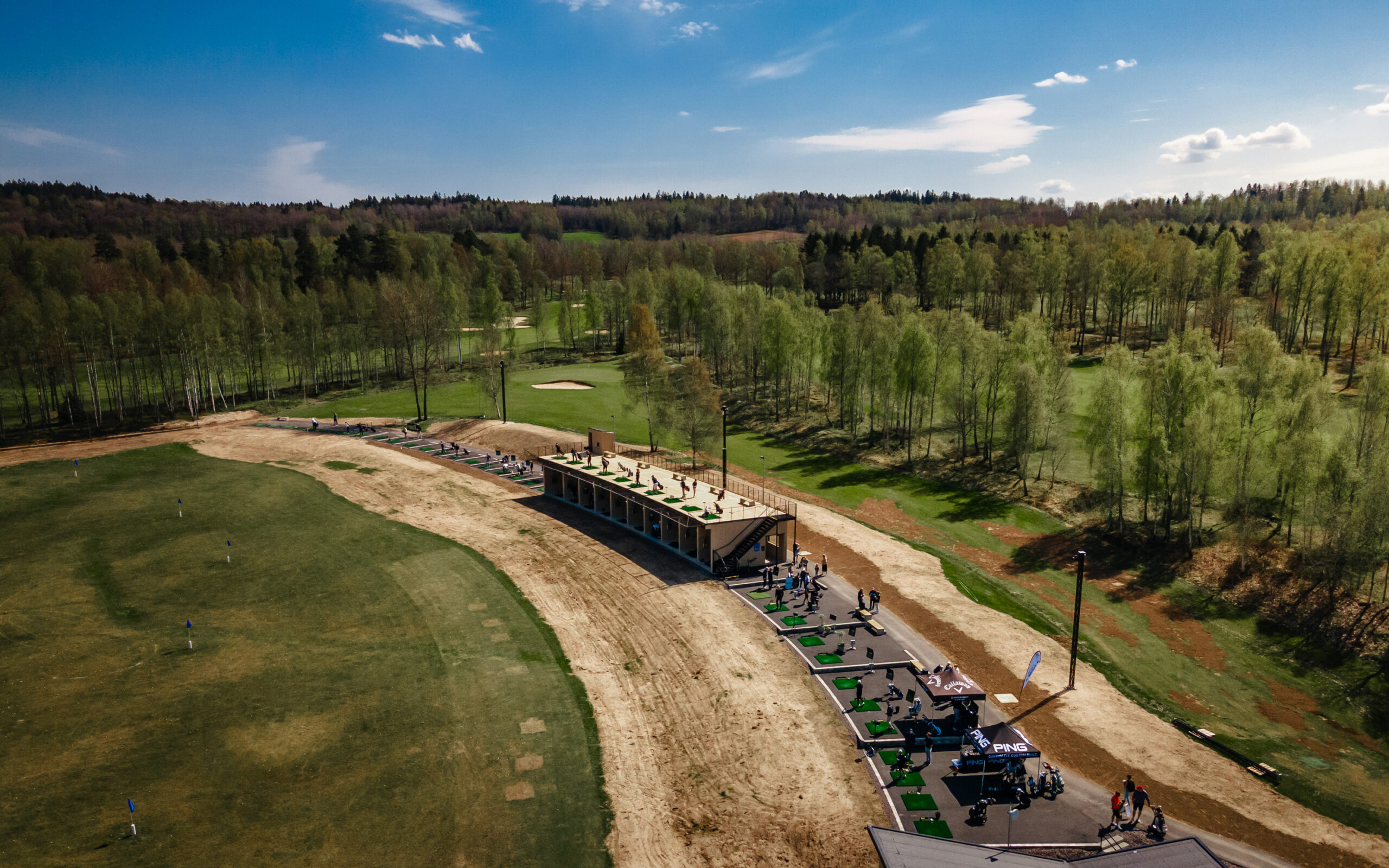
Driving ranges have changed considerably over the past decade. Increased participation, advances in practice technology and evolving customer expectations have all influenced how facilities operate. At the same time, staffing challenges and rising operating costs have encouraged many operators to reconsider how range maintenance is managed.
Planning for the future is no longer simply about adding more bays or purchasing new equipment. It involves understanding how the entire range ball operation will perform as demand changes over time.
Looking Beyond Today’s Requirements
Many driving ranges are designed around current usage levels. While this approach may satisfy immediate demand, it can become restrictive as facilities become busier.
Additional golfers require more range balls. More balls require more frequent collection, increased washing capacity and a reliable method of returning clean balls to the dispenser. Each stage places greater demand on the next.
As facilities grow, the limiting factor is often not the number of balls available, but the ability to keep those balls moving efficiently through the system.
Labour Is Becoming an Increasing Consideration
Range ball collection has traditionally relied on scheduled manual operation, often taking place early in the morning or during quieter periods of the day.
For many facilities, this process continues to work well.
However, labour availability has become an increasingly important consideration across the golf industry. Repetitive operational tasks can consume valuable staff time that may be required elsewhere on site.
As a result, many operators are beginning to evaluate where automation can support existing teams rather than replace them.
Flexibility Matters
Every driving range operates differently.
Some facilities may benefit from improving washing capacity. Others may identify ball collection as the primary constraint. New facilities may choose to integrate automation from the outset, while existing ranges often introduce improvements gradually as operational requirements evolve.
Future planning is therefore less about installing every available technology and more about creating a workflow that can adapt over time.
Thinking in Systems Rather Than Individual Machines
One of the biggest changes in modern range design is the way operators view the ball handling process.
Rather than considering ball pickers, washers or dispensers as separate pieces of equipment, many facilities now evaluate how each stage supports the next. A faster washer offers limited benefit if collected balls cannot reach it efficiently. Likewise, increasing collection frequency may have little impact if clean balls cannot be returned to golfers quickly enough.
Understanding how each component contributes to the overall workflow often provides greater long-term value than improving individual processes in isolation.
Preparing for Tomorrow’s Demands
Every driving range has different priorities, budgets and operating models.
Some will continue to rely on traditional workflows. Others will gradually introduce automation where it provides measurable operational benefits.
Whatever approach is taken, planning for future demand means looking beyond today’s challenges and considering how the entire range ball operation can continue to deliver a reliable experience for golfers in the years ahead.
