
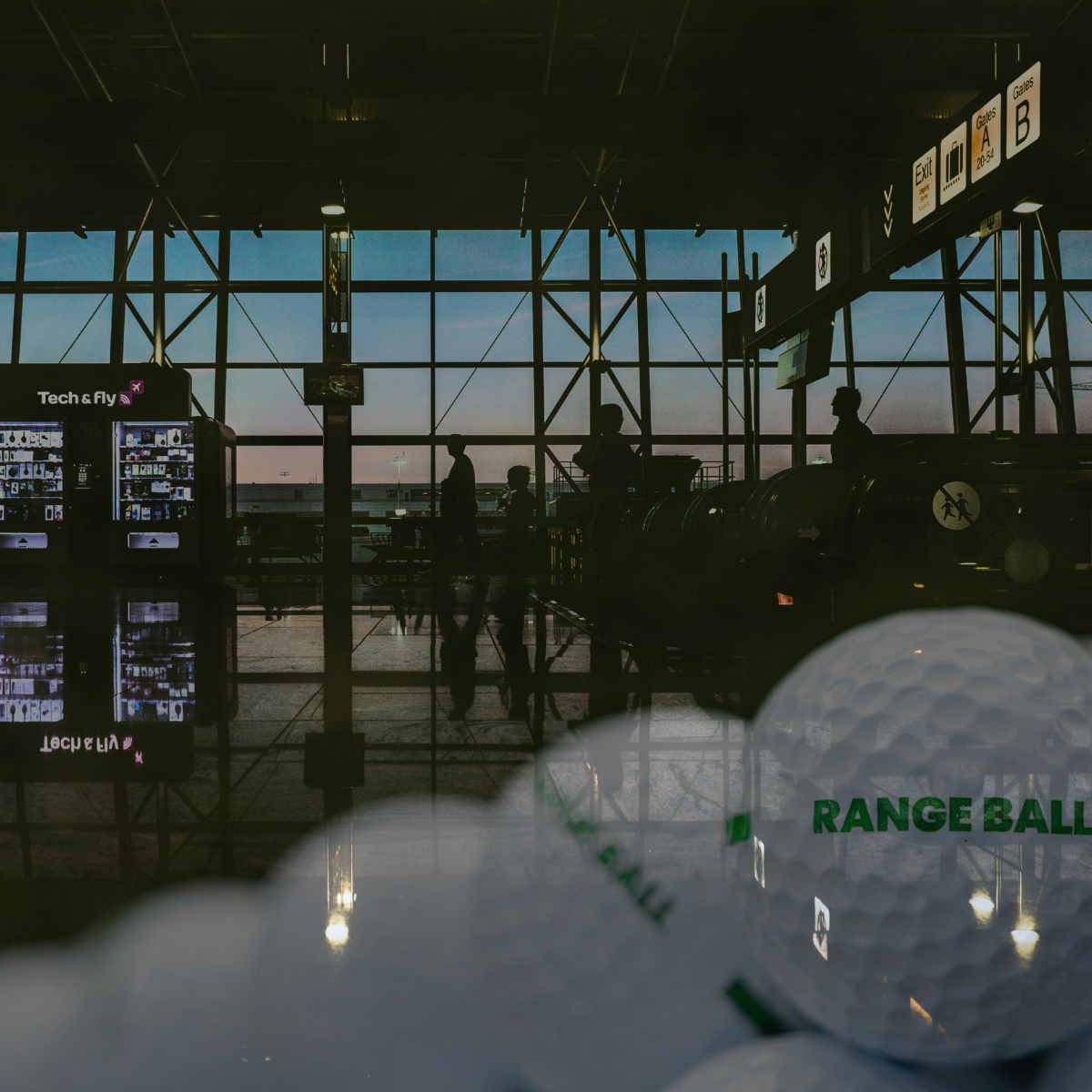
At first glance, airports and golf facilities have very little in common. One moves millions of passengers around the world. The other helps golfers improve their game. Yet behind the scenes, both face a surprisingly similar challenge: moving large volumes of assets efficiently, consistently, and with as little disruption as possible.
For airports, it’s luggage. For driving ranges, it’s golf balls. And increasingly, both rely on automation and infrastructure to make it happen.
The Systems You Never See
When passengers arrive at an airport, they rarely think about the complex network operating beneath their feet. Conveyor belts, sorting systems, scanners, storage areas and software, work together to ensure luggage arrives where it needs to be at exactly the right time.
The same principle is becoming increasingly important in golf. Golfers see practice bays, targets, and a clean bucket of balls ready to use. What they don’t see is the infrastructure required to make that experience possible. Collection timetables, receiving units, elevators, washing equipment, storage solutions, dispensers and management software, all work together to create a seamless operation. The better the system, the less visible it becomes.
Efficiency Is No Longer Optional
As facilities get busier and operating costs increase, reliable systems play a more central role in keeping things manageable. Balls need:
- Collecting
- Washing
- Transporting
- Dispensing
Historically, these tasks required significant staff time and resources. Today, many facilities are replacing repetitive manual workflows with integrated systems that operate continuously throughout the day.
The goal isn’t simply to save labour. It’s to create a facility that runs more efficiently, more predictably, and more consistently. Where the systems absorb demand, not people. Much like an airport, success depends on what happens behind the scenes.
Infrastructure Is Becoming a Competitive Advantage
For years, golf facilities focused heavily on customer-facing investments.
- New bays
- New technology
- New experiences
While these remain important, operators are increasingly recognising that operational infrastructure has a direct impact on customer satisfaction too. When systems run smoothly, golfers experience shorter wait times, better service, and a more reliable facility. When they don’t, operational issues quickly become visible.
The facilities seeing the greatest long-term success are often those investing as much in their infrastructure as they are in their customer-facing features.
Designing for the Future
Perhaps the strongest similarity between airports and modern golf facilities is scalability. Neither can afford to redesign operations every time demand increases. Instead, both rely on infrastructure built to support seasonal peaks and future growth.
As golf participation continues to rise, just as passengers expect their luggage to be waiting when they arrive, golfers expect the same from the dispenser.
